

Users See AI Bias but Can't Quit Google
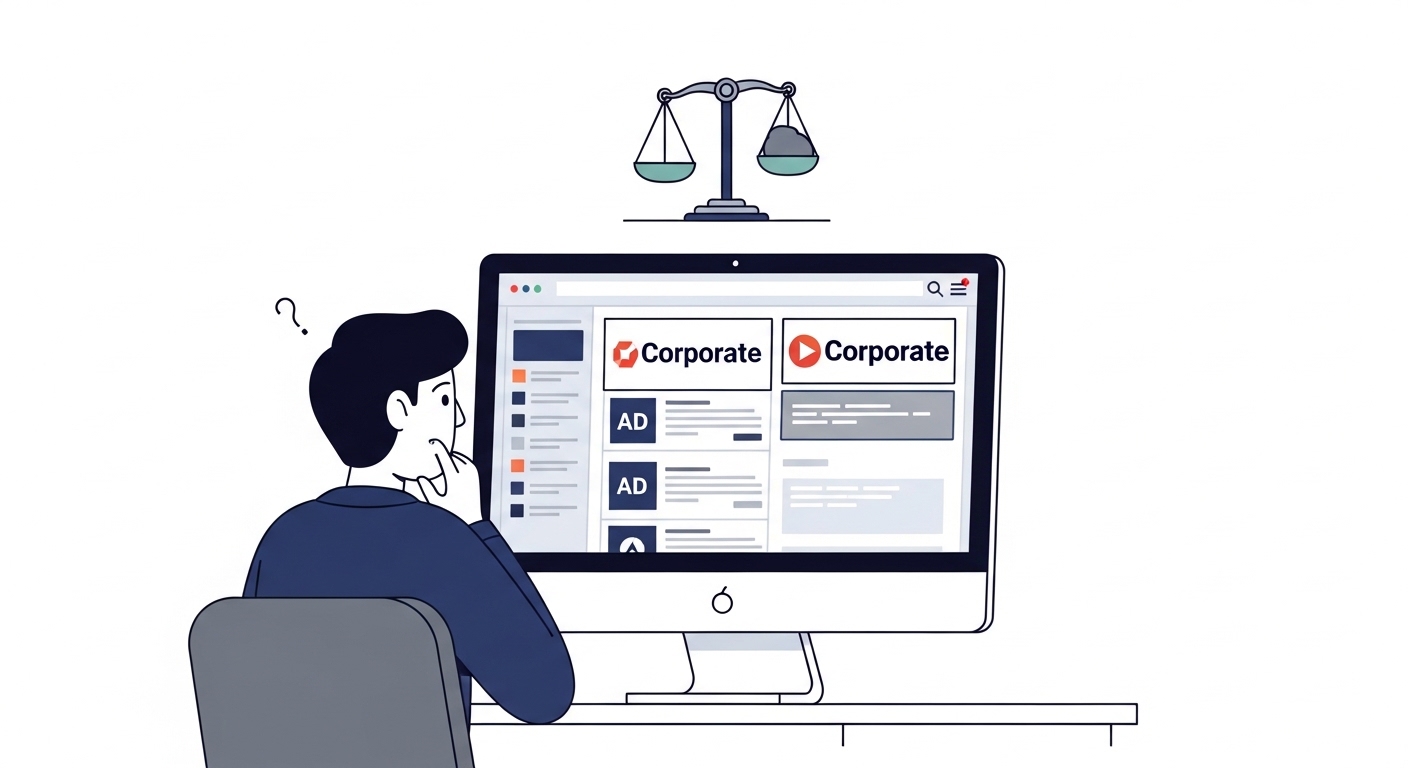
Roughly 60 percent of users believe Google's AI favors advertisers and large brands. Yet nearly three quarters still prefer Google over ChatGPT for everyday searches.

Key Takeaways
- 1 60% believe Google's AI is biased toward advertisers and big brands
- 2 73% still prefer Google over ChatGPT for common searches
- 3 70%+ believe Google filters what information they can see
- 4 55% believe AI will replace traditional search within two years
- 5 ~75% believe AI search will spread misinformation
- 6 Less than 1/3 would pay for a human-only search engine
That contradiction sits at the heart of modern search behavior.
According to a 1,001-respondent survey conducted by SearchTides in October 2025, users increasingly distrust how AI-driven search systems work, but they have not meaningfully changed their habits. People see bias, filtering, and commercial influence. Then they open Google anyway.
This article breaks down what the data actually shows, why distrust has not yet led to mass defection, and what this shift means for brands trying to stay visible in AI-mediated search.
The Core Numbers
Let's ground this in specifics.
From the SearchTides AI Usage & Trust in Search Survey (n = 1,001, margin of error ±3.1%):
60% of respondents say Google's AI answers are biased toward advertisers or big brands ("Probably" or "Absolutely").
70%+ believe Google's AI is filtering what information they are allowed to see ("Yes, too much" or "Somewhat").
73% still prefer Google over ChatGPT for common searches.
27% prefer ChatGPT.
55% believe AI will replace traditional search within the next two years.
~75% say AI-generated search answers are likely to spread misinformation.
Less than one-third say they would pay for a human-only search engine with no AI summaries.
These are not fringe opinions. They are majority views.
Bias Is No Longer Abstract
When users talk about "bias," they are not referring to political ideology. They are referring to commercial influence.
Respondents consistently described AI search as favoring:
- Large brands
- Advertisers
- Corporate publishers
- Established platforms
At the same time, independent sites, blogs, and niche experts were perceived as being pushed down or summarized away entirely.
This matters because AI summaries make ranking decisions visible. Traditional search hid its editorial choices behind ten blue links. AI surfaces a single synthesized answer. The act of selection becomes obvious.
In the survey, people who believed Google's AI was biased were far more likely to also believe it was actively filtering or censoring results. For many users, those ideas are functionally the same.
Bias plus filtering equals gatekeeping.
And Yet, Google Still Dominates Behavior
Despite this distrust, Google remains the default search tool for most users.
Why?
Because behavior is shaped less by belief and more by habit, speed, and perceived risk.
Google still wins on:
- Familiarity
- Speed to answer
- Coverage of local and transactional queries
- Integration with maps, shopping, and navigation
Even users who distrust Google's AI view it as "good enough" for most tasks. ChatGPT and other AI tools feel powerful, but also opaque. For time-sensitive, commercial, or location-based searches, users still default to Google.
Distrust does not automatically cause switching. It creates friction. Switching happens later.
This Is Not Just Google vs ChatGPT
For simplicity, this conversation often gets framed as Google versus ChatGPT. In reality, users are navigating a growing ecosystem:
Each platform is trusted for different intents.
ChatGPT is increasingly used for:
- • Research
- • Explanations
- • Planning
- • Ideation
Google still dominates:
- • Local searches
- • Commerce
- • Brand lookups
- • Navigation
- • Real-time information
The key shift is not platform replacement. It is decision delegation. Users are no longer evaluating lists of results. They are accepting answers chosen by systems.
A Note on Opposing Evidence
It is important to acknowledge that AI bias does not always favor the biggest brands.
A recent study by SEMrush found that lower-ranking content can be cited more frequently by AI systems if it is more specific, structured, and contextually relevant.
That finding matters.
It suggests that AI selection is not purely about authority or size. It is about clarity, specificity, and usefulness within a given context.
This does not contradict the survey findings. It explains them.
Users perceive bias because large brands more often meet those criteria at scale. Smaller sites can still win, but only if they are structured in ways AI systems can easily understand and trust.
The Misinformation Concern Is Real
Another strong signal from the survey was concern about misinformation.
Approximately three quarters of respondents believe AI-generated search answers are likely to spread misinformation. Among those respondents, support for legal requirements forcing AI systems to list their sources was overwhelming.
This is not anti-AI sentiment.
It is pro-transparency sentiment.
Users are not asking for less AI. They are asking to see how decisions are made.
Why Users Won't Pay to Escape AI
One surprising result was the lack of appetite for a paid, human-only search engine.
Despite widespread distrust, most users said they would not pay for a version of search without AI summaries.
That tells us something important:
- AI search is becoming infrastructure
- Opt-out models will struggle
- Resistance is philosophical, not behavioral
The future is not "AI versus human search." It is AI with varying levels of transparency and accountability.
The Real Shift: From Evaluation to Acceptance
The most important change revealed by this survey is not platform preference.
It is how users process information.
Users no longer evaluate multiple sources. They accept synthesized answers. Trust is transferred from websites to systems.
That changes everything for brands.
Visibility alone is no longer enough. If an AI system does not understand who you are, what you do, and why you matter, you may never be surfaced—even if your content is excellent.
So What Should Brands Actually Do?
This is the practical takeaway.
If users accept AI decisions instead of evaluating results, brands must optimize for selection, not clicks.
That means:
Clarify identity
AI systems need consistent signals about what your brand is, who it serves, and what it is authoritative on.
Control language
The words used to describe your brand across your site, press, profiles, and citations need to align.
Build trust off-site
AI systems rely heavily on external validation. Reviews, mentions, and third-party citations matter more than ever.
Structure content for AI
Clear headings, direct answers, and specific use cases increase the chance of being selected, not just indexed.
This is where SearchTides' AI Undercurrent methodology fits in. It is designed specifically to map how brands are interpreted, summarized, and selected by AI systems across platforms—not just ranked in traditional search.
The goal is not to "beat" AI bias. It is to understand it and work within it.
Methodology
This article is based on the SearchTides AI Usage & Trust in Search Survey, conducted in October 2025.
- Sample size: 1,001 respondents
- Geography: Primarily United States
- Margin of error: ±3.1% at 95% confidence
- Topics covered: AI search adoption, trust, bias, misinformation, platform preference, and willingness to pay
A full breakdown of the survey data is available here:
View the full survey dataset and methodologyFinal Takeaway
Users see AI bias. They talk about it openly. They believe Google's AI favors advertisers and large brands.
And then they use it anyway.
That is not hypocrisy. It is human behavior.
The risk for search platforms is not distrust alone. It is distrust combined with dependency. That combination creates pressure for transparency, regulation, and sudden shifts when alternatives feel safe enough.
For brands, the message is clear.
Search is no longer about ranking first.
It is about being chosen when the system decides who matters.
And increasingly, users are watching that decision more closely than ever.
References and Further Reading
Cite this research
APA
Iwasiuk, D. (2026, January 15). Survey Says Google AI Shows Bias in Search Results. SearchTides. https://searchtides.com/survey-google-ai-shows-bias/
Chicago
Iwasiuk, Derek. “Survey Says Google AI Shows Bias in Search Results.” SearchTides, January 15, 2026. https://searchtides.com/survey-google-ai-shows-bias/